


Centari was built around a core insight: legal documents are systems, not flat text to be read in sequence. A provision’s meaning can depend on a defined term dozens of pages away, or can be changed by a new agreement signed years later. Our Deal Reasoning Engine was designed to navigate that complexity the way an attorney would, which is why our customers see accuracy on complex agreements that general-purpose legal AI tools cannot match.
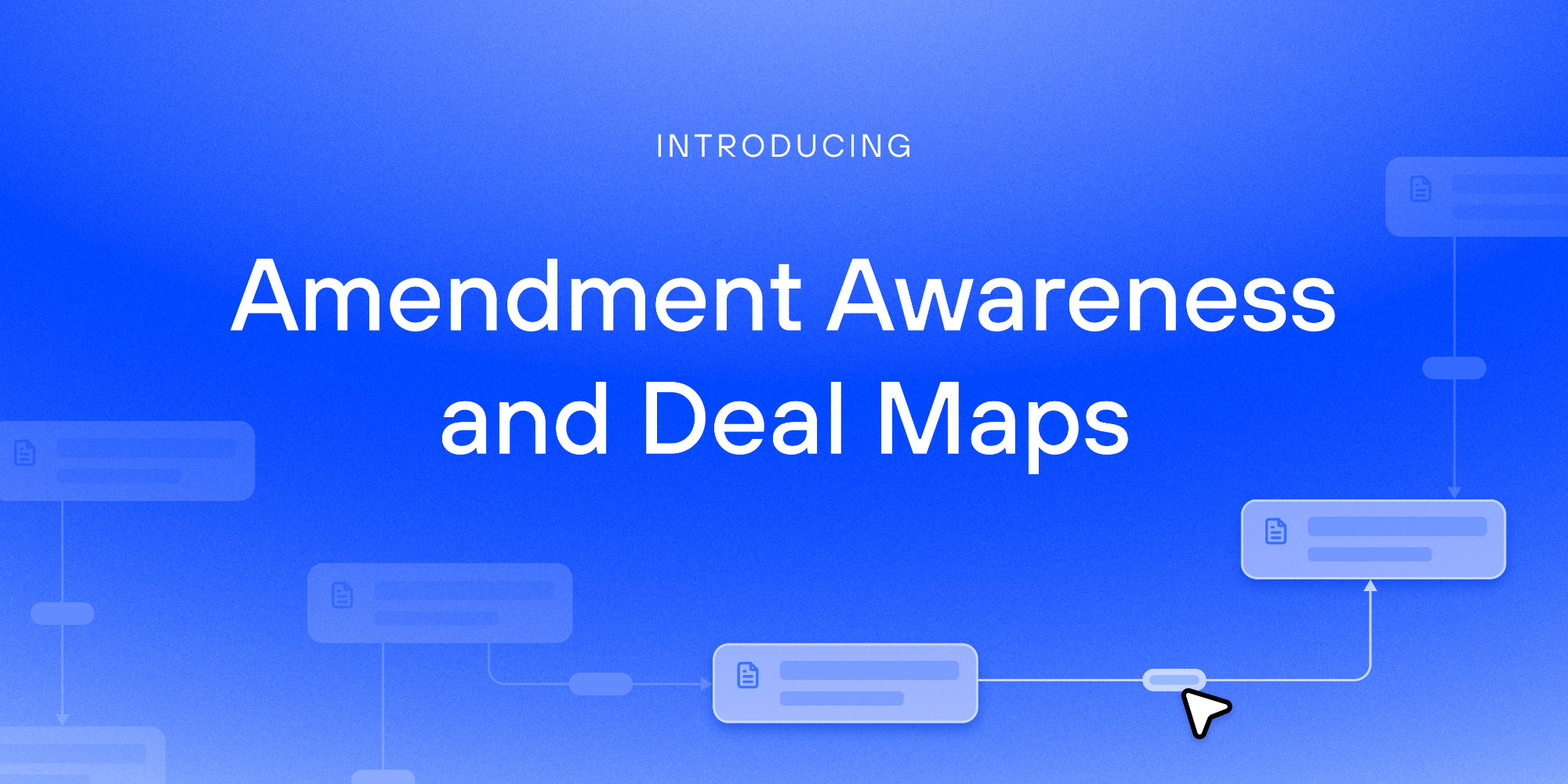
Today we're putting Centari’s technology to work across entire document sets, with two new capabilities lawyers have long needed and that other products haven’t delivered: Amendment Awareness and Deal Maps.
Keep deal data current as deals evolve
When an agreement is amended, most tools can pull terms from the new document, but the automation stops there — someone still has to map the amended document against the original and make a judgment call on whether other terms have materially changed.
Amendment Awareness closes that gap. Built on a proprietary ontology that models how amendments relate over time, it understands each new version within the context of the matter it belongs to. Upload an amendment, and Centari identifies what changed and updates the deal profile to the operative terms.
It also follows the change downstream. Redefine EBITDA in a credit facility, and the new meaning can run through dozens of provisions that depend on the term. Centari surfaces all of them, not only the clause that was amended. Because this lives in Centari’s taxonomy rather than hard-coded for a specific document type, it holds across the diverse practice areas and deal types that firms advise on, including credit facilities, purchase agreements, and fund documents.
Understand complex deal structures at a glance
Complex transactions sprawl across agreements, ancillaries, exhibits, and side letters, and working out how they connect usually means piecing it together from a closing checklist and a folder of drafts.
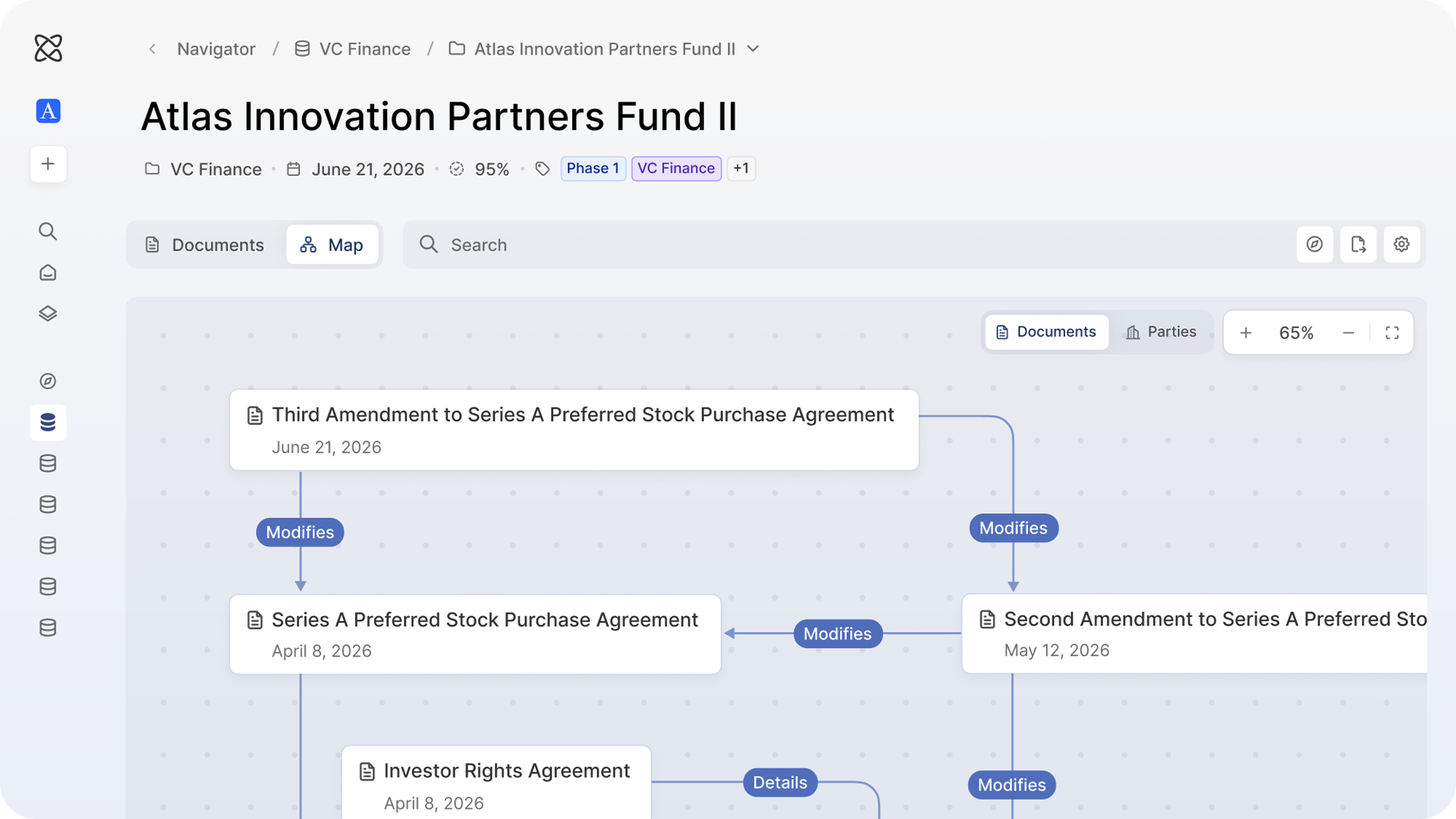
Deal Maps does it automatically, generating a visual graph of how the agreements in a matter incorporate, modify, satisfy, replace, or supersede one another. An attorney can see what governs what, and what is still operative, before opening a single document.
Your firm’s compounding deal database
Models keep getting more powerful, and firms have more ways than ever to put them to work. But an AI system is only as good as the data beneath it. If a deal profile is wrong, every answer drawn from it is wrong, exactly when the stakes are highest. Amendment Awareness and Deal Maps exist to keep that from happening: reasoning across a closing set the way an attorney would, and turning it into a structured, citation-backed record the firm owns.
When read on their own, documents are just text. When read as a system, they become the firm's deal intelligence, and every deal in your database makes the next one sharper.