



A client is choosing counsel for a complex, high-value deal. The partner leading the pitch knows the firm has done this work many times. But the client has heard three versions of the same pitch this week, and every firm sounds experienced when experience is only asserted.
Historically, most mandates never went to a pitch. They were won on relationships built over years, on judgment the client already trusts, and on a deal team the client already knows. But increasingly, firms are winning dealflow through structured processes: a panel review, an RFP, a competitive bakeoff for a client the firm has not worked with before. There, the finalist firms are usually on equal footing on superficial measures of prestige, and all claim to know the market. The firm that can back up that claim gains the edge.
The proof in every pitch deck looks the same
Firms already prove experience. League tables, ranked directories, the deal list marketing pulls together for the meeting. Every finalist brings the same material, so none of it separates one firm from another.
The proof that wins a client is specific to the client: what terms are standard in their sector this year, how those terms have moved across the firm's own recent deals, and what the firm's experience says about the deal in front of them. Firms hold all of this in their closed matters, and the record grows with every deal. The hard part is reaching it at the speed a pitch runs, and keeping it inside the firm's ethical walls and access controls. That is what Centari does.
1. Precedent, at the speed of a pitch
Early in a pitch, a client wants to know how many deals of this type has the firm done in this sector since 2022, and on what terms? Answering it can take a week of emails across the firm. When a deal closes, its details scatter into closing sets, summaries, and the memories of the attorneys involved. Knowledge teams work against that scattered context every day, with legacy tools that were never built to manage complex information retrieval at scale.

Centari keeps the firm's deal history in one searchable record. Search for past deals by industry, deal type, counterparty, structure, among hundreds of other attributes. Results come back organized and cited, with links to the source documents. Centari structures each deal as it closes, so the record stays current and no one has to rebuild it for the next pitch.
2. Demonstrate “what is market”
At some point a client will ask whether a specific term or a structure is standard. Today the answer often comes from a published survey that is a year old and covers a different segment, or from the deals the people in the room (or down the hall) happen to remember.
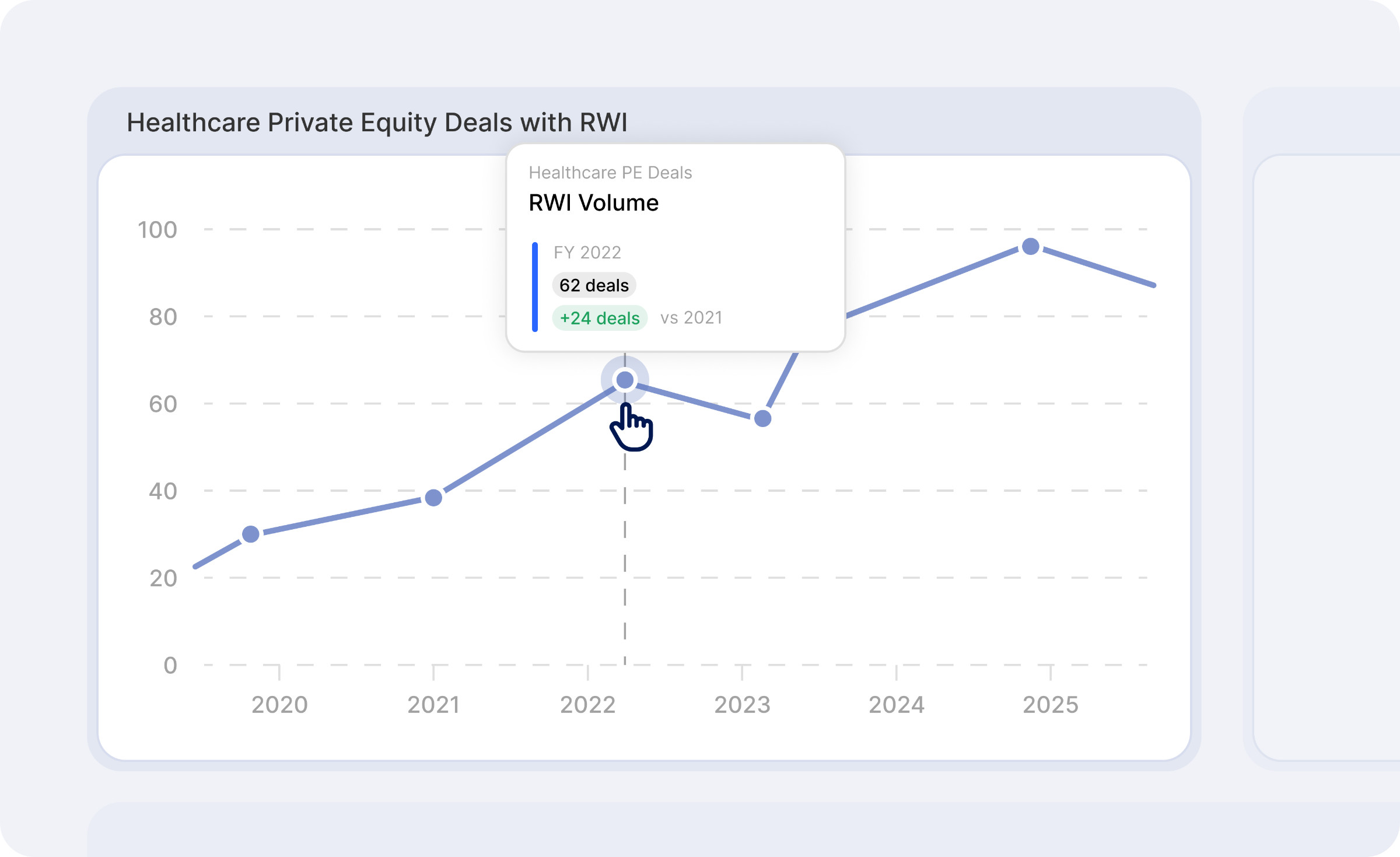
An answer drawn from the firm's own aggregated corpus of knowledge, in the client's own sector, is the one that earns the trust of a sophisticated client. Centari’s Views product allows firms to build charts directly from the firm's deal data, with control over what the audience sees, including anonymized views, so the firm decides how much detail to show.
3. Turn experience into a point of view
A competitive process asks the partner for the firm's experience with this deal type in this sector, and where the partner sees terms heading. BD can pull the deals. The judgment has to come from the partner, and today it comes from memory and whatever the team recalls.

Ask Centari Intelligence the questions the client is asking, and get answers drawn from the firm's own deals, each traceable to the source document. The partner walks in with a view backed by the firm's full record.
Why general-purpose AI tools cannot build this
These one-off AI tools handle single tasks well, like pulling a term from one agreement. But each query stands alone. Submit the pitch and the work is gone. The next one starts from scratch. These tools also cannot read a legal document as a connected system. They treat a 300-page agreement as flat text, and miss the defined terms, cross-references, and conditional logic that decide what a provision means.
Centari's Deal Reasoning Engine reads the structure of a closing set the way an attorney does. The data it produces is client-ready. And every deal adds to a central, governed database, ready to use in the next pitch and everywhere else the firm’s knowledge powers the business and practice of law.
The advantage a competitor cannot copy
Clients hire the firm's judgment. Centari does not change that. It changes what the partner brings into the room: the whole firm's experience, not just what one team remembers. A competitor can buy the same software. It cannot buy the firm's deal history.
Firms including Ropes & Gray, Willkie, Fried Frank, Wilson Sonsini, and Gilbert + Tobin use Centari to turn their deal history into a firmwide asset. Request a demo to see it on your own deals.